Cheshvan: The Ambiguous Month of the Jewish Calendar
Associated Articles: Cheshvan: The Ambiguous Month of the Jewish Calendar
Introduction
With enthusiasm, let’s navigate by way of the intriguing matter associated to Cheshvan: The Ambiguous Month of the Jewish Calendar. Let’s weave fascinating data and provide recent views to the readers.
Desk of Content material
Cheshvan: The Ambiguous Month of the Jewish Calendar

Cheshvan, the eighth month of the Jewish civil calendar and the second month of the ecclesiastical yr, occupies a singular and sometimes ignored place throughout the Jewish liturgical panorama. In contrast to its neighbors, Tishrei (the month of the Excessive Holy Days) and Kislev (which homes Hanukkah), Cheshvan lacks main holidays or important festivals. This absence of prescribed celebrations, nonetheless, does not diminish its significance. As an alternative, it presents an area for reflection, introspection, and a refined, typically understated, religious journey. This month, devoid of mandated joyous observances, turns into a canvas upon which people and communities paint their very own religious narratives.
Cheshvan’s ambiguous nature is mirrored in its very title. The etymology is unsure, with a number of proposed origins, every hinting on the month’s character. Some counsel a connection to the Hebrew root chesev, which means "to calculate" or "to reckon," probably referring to the agricultural calculations and assessments undertaken throughout this era. Others hyperlink it to the phrase chashmal, which means "electrical energy" or "brightness," a considerably metaphorical interpretation that may allude to the typically unpredictable climate patterns of the month. This inherent ambiguity mirrors the month’s unpredictable nature, each climatically and spiritually.
The Meteorological and Agricultural Significance of Cheshvan:
Cheshvan falls through the autumnal transition within the Land of Israel, marking the shift from the heat of autumn to the colder temperatures of winter. This era is characterised by unpredictable climate patterns. One may expertise heat sunny days adopted by sudden, chilly rains. This meteorological variability is mirrored within the agricultural cycle. The harvest is essentially full, and the land begins its preparation for the following season. The farmers’ work throughout Cheshvan is primarily targeted on tending to the olive harvest, which frequently extends into this month, and getting ready the fields for the winter months. The unpredictable climate poses challenges, demanding cautious planning and flexibility from these reliant on the land.
This agricultural actuality profoundly influenced the Jewish calendar’s construction. The absence of main festivals in Cheshvan displays the relative quietude of the agricultural cycle presently. The vitality and focus that have been devoted to the Excessive Holy Days and the next Sukkot have subsided, permitting for a interval of relaxation and reflection earlier than the anticipation of the winter holidays.
Cheshvan’s Religious Panorama: A Time for Introspection:
The dearth of prescribed holidays in Cheshvan creates a singular alternative for private religious development. With out the structured framework of prescribed rituals and celebrations, people are inspired to have interaction in self-reflection and discover their relationship with God and their group in a extra private method. The month turns into a time for introspection, a interval of quiet contemplation the place one can assess the religious classes realized through the Excessive Holy Days and plan for the yr forward.
This introspection may manifest in numerous methods. Some may select to delve deeper into their Torah research, specializing in particular texts or themes related to their private journey. Others may interact in acts of tzedakah (charity) or volunteer work, extending acts of kindness to their group. Nonetheless others may dedicate time to non-public prayer and meditation, looking for a deeper reference to the divine. The probabilities are countless, restricted solely by the person’s creativity and religious aspirations.
The Size of Cheshvan: A Variable Issue:
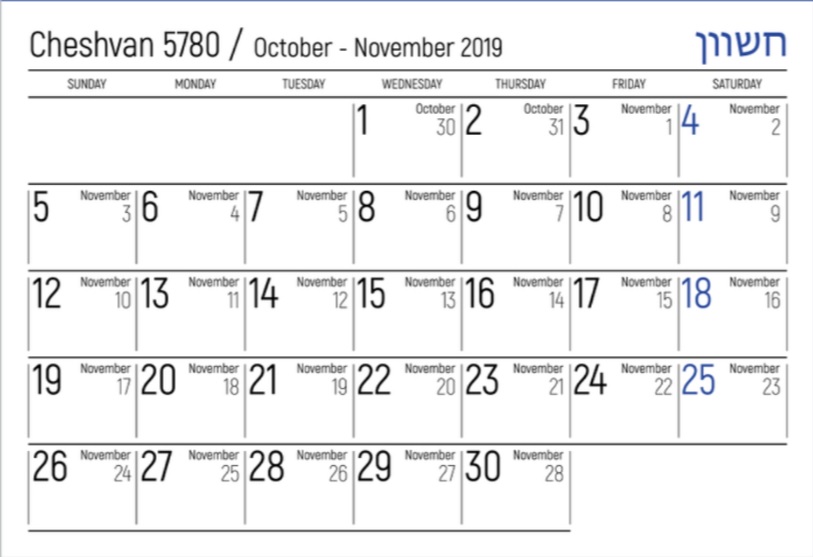
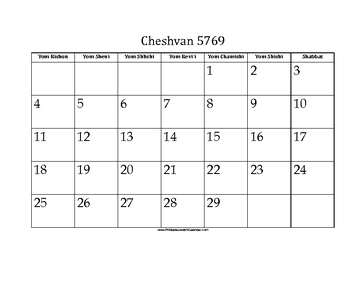
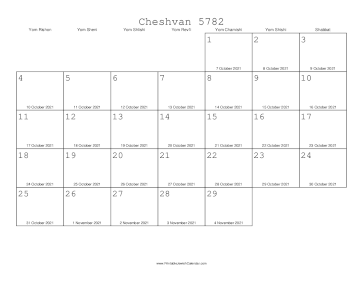
Probably the most distinguishing options of Cheshvan is its variable size. In contrast to most months within the Jewish calendar, which have a hard and fast variety of days, Cheshvan can have both 29 or 30 days. This variability is a consequence of the advanced lunisolar nature of the Jewish calendar, which strives to reconcile the lunar cycle with the photo voltaic yr. The size of Cheshvan is set by the calculations essential to align the calendar with the agricultural seasons and the incidence of Passover within the spring. This variability provides one other layer of ambiguity to the month, mirroring the unpredictable nature of life itself.
The various size of Cheshvan has led to varied interpretations and traditions inside Jewish communities. Some view the longer Cheshvan as a blessing, offering extra time for introspection and religious development. Others see the shorter Cheshvan as a chance to shortly transition to the approaching winter holidays. No matter its size, the month persistently serves as a bridge between the extraordinary religious experiences of Tishrei and the anticipation of Kislev’s Hanukkah.
Cheshvan in Jewish Literature and Custom:
Whereas Cheshvan lacks main holidays, its presence is subtly woven into Jewish literature and custom. The month’s quietude typically finds expression in poetry and prayers, reflecting the contemplative temper of the season. The uncertainty of the climate and the agricultural cycle throughout this time have impressed reflections on the transient nature of life and the significance of appreciating the current second.
The rabbis of the Talmud additionally acknowledged Cheshvan’s distinctive character. Whereas not explicitly specializing in the month as an entire, their discussions of agricultural practices and the challenges of the autumnal season typically not directly check with the themes central to Cheshvan’s expertise. The emphasis on cautious planning, adaptation to altering circumstances, and the significance of group assist throughout instances of uncertainty resonates deeply with the challenges confronted throughout this month.
Cheshvan in Fashionable Jewish Life:
In up to date Jewish life, Cheshvan presents a vital alternative for intentional religious follow. The absence of prescribed festivities permits people and communities to create their very own significant experiences. This may contain organizing group service initiatives, internet hosting casual gatherings for research and dialogue, or just dedicating time for private reflection and prayer. The pliability of Cheshvan permits for a private and communal method to religious development, tailor-made to the wants and aspirations of every particular person and group.
The unpredictable nature of Cheshvan, each meteorologically and in its variable size, serves as a reminder of life’s inherent uncertainties. This ambiguity, nonetheless, might be reframed as a chance for development. Embracing the sudden, adapting to altering circumstances, and discovering which means within the quiet moments – these are among the key classes that Cheshvan presents to those that are prepared to pay attention. It’s a month that encourages us to create our personal religious narratives, to search out which means within the on a regular basis, and to understand the refined great thing about a season typically ignored. Cheshvan, due to this fact, isn’t merely a transition between main holidays, however a big month in its personal proper, providing a singular and worthwhile contribution to the Jewish religious calendar.



Closure
Thus, we hope this text has supplied worthwhile insights into Cheshvan: The Ambiguous Month of the Jewish Calendar. We hope you discover this text informative and useful. See you in our subsequent article!