Planting Your Zone 5 Victory Backyard: A Complete Vegetable Calendar
Associated Articles: Planting Your Zone 5 Victory Backyard: A Complete Vegetable Calendar
Introduction
With enthusiasm, let’s navigate by the intriguing subject associated to Planting Your Zone 5 Victory Backyard: A Complete Vegetable Calendar. Let’s weave attention-grabbing data and provide recent views to the readers.
Desk of Content material
Planting Your Zone 5 Victory Backyard: A Complete Vegetable Calendar

Zone 5, with its distinct seasons of harsh winters and comparatively quick rising seasons, presents distinctive challenges and rewards for the house gardener. Mastering the timing of planting is essential to success on this local weather. This complete information gives an in depth vegetable planting calendar for Zone 5, providing insights into optimum planting occasions, succession planting methods, and ideas for maximizing your yield. Keep in mind that microclimates inside Zone 5 can differ, so at all times verify your native frost dates for probably the most correct data. These dates, usually out there out of your native agricultural extension workplace or climate station, mark the final anticipated frost in spring and the primary anticipated frost in autumn.
Understanding Zone 5’s Rising Season:
Zone 5 usually experiences the final frost between mid-Might and early June and the primary frost between mid-September and early October. This interprets to a rising season of roughly 120-150 days, relying in your particular location throughout the zone. This comparatively quick window necessitates cautious planning and the choice of fast-maturing varieties.
Beginning Seeds Indoors:
Many greens profit from a head begin indoors. This enables them to determine robust root methods earlier than being transplanted outside, growing their possibilities of survival and earlier harvests. Start beginning seeds indoors 6-8 weeks earlier than your final anticipated frost date. Fashionable decisions for indoor beginning embody:
- Tomatoes: Require heat temperatures and loads of daylight. Begin seeds early and harden them off steadily earlier than transplanting.
- Peppers: Just like tomatoes, peppers want heat and daylight. Select varieties suited to shorter rising seasons.
- Eggplant: Additionally a warm-weather crop that advantages from an early begin indoors.
- Broccoli, Cabbage, Cauliflower: Whereas these could be direct-sown, beginning them indoors gives earlier harvests.
- Lettuce & different greens: Could be began indoors for earlier harvests, however many types are additionally profitable with direct sowing.
Direct Sowing:
Some greens thrive when sown immediately into the backyard mattress. This eliminates the transplanting shock and infrequently simplifies the method. Direct sowing is good for:
- Carrots: Do not transplant properly resulting from their delicate taproots.
- Beans: Favor heat soil and are simply direct-sown.
- Peas: Tolerate cooler temperatures and could be sown early within the season.
- Radishes: Fast-growing and excellent for succession planting.
- Beets: Just like carrots, they do not like transplanting.
- Summer time Squash & Zucchini: Heat-weather crops that may be sown immediately after the final frost.
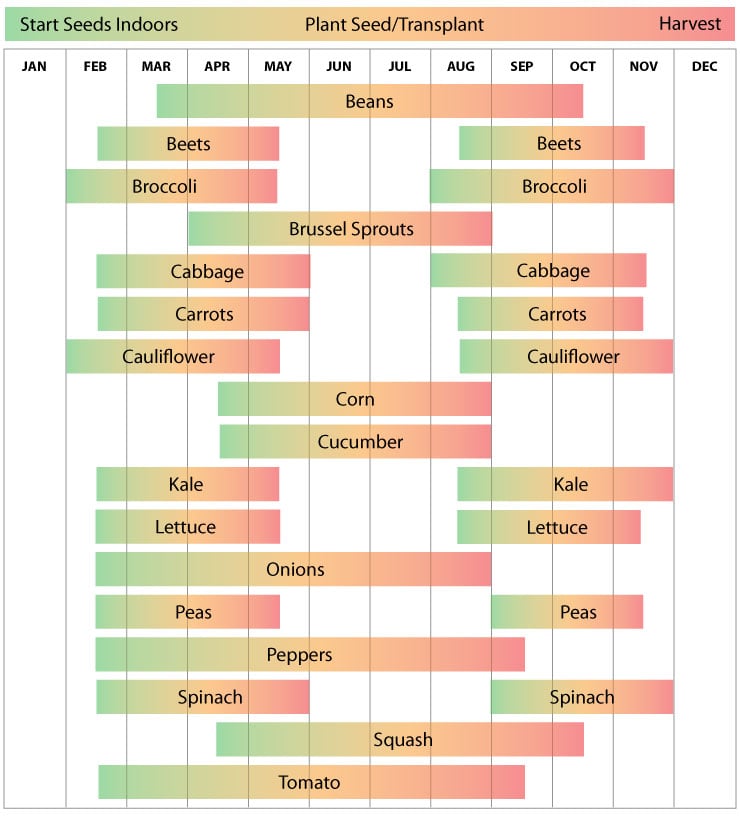
Zone 5 Vegetable Planting Calendar (Approximate Dates – Modify primarily based in your native frost dates):
Early Spring (Late April – Early Might):
- Chilly-hardy greens: Lettuce, spinach, kale, arugula (direct sow)
- Peas: (direct sow)
- Radishes: (direct sow)
- Onions (units): Plant units for a faster harvest.
- Potatoes: Plant seed potatoes.
Mid-Spring (Might – Early June):
- Transplant tomatoes, peppers, and eggplant: (began indoors)
- Summer time squash and zucchini: (direct sow)
- Beans: (direct sow)
- Corn: (direct sow) – select early-maturing varieties.
- Broccoli, Cabbage, Cauliflower: (transplants or direct sow)
Summer time (June – August):
- Succession planting of lettuce, spinach, and different greens: Plant new crops each few weeks for a steady harvest.
- Summer time squash and zucchini: Succession planting is essential for these prolific producers.
- Beans: Proceed succession planting for a steady harvest.
- Root greens: Beets, carrots, parsnips (direct sow) – goal for later planting to keep away from bolting.
Late Summer time/Early Fall (August – September):
- Cool-season greens: Lettuce, spinach, kale (direct sow) – these will mature earlier than the primary frost.
- Root greens: Carrots, parsnips (if not already planted).
- Garlic: Plant garlic cloves for subsequent 12 months’s harvest.
Fall (September – October):
- Harvest remaining crops.
- Put together backyard beds for winter: Clear up particles, add compost, and canopy with mulch.
Succession Planting Methods for Zone 5:
Succession planting is vital to maximizing your harvest in Zone 5’s shorter rising season. This entails planting new crops at common intervals to make sure a steady provide of recent greens all through the season. Listed below are some examples:
- Lettuce: Plant a brand new batch each 2-3 weeks for a steady harvest.
- Radishes: Fast-maturing and very best for succession planting between different crops.
- Bush beans: Plant a brand new row each 2-3 weeks.
- Summer time squash and zucchini: Plant a number of vegetation each 2-3 weeks to maintain up with their prolific manufacturing.
Ideas for Success in Zone 5:
- Select applicable varieties: Choose vegetable varieties particularly bred for shorter rising seasons. Search for "early maturing" or "days to maturity" data on seed packets.
- Soil preparation: Guarantee well-drained soil wealthy in natural matter. Amend your soil with compost earlier than planting.
- Frost safety: Be ready to guard your vegetation from late spring or early fall frosts utilizing row covers or different frost safety strategies.
- Watering: Constant watering is essential, particularly throughout dry spells. Mulching helps retain soil moisture.
- Pest and illness administration: Monitor your vegetation commonly for pests and illnesses and take applicable motion.
- Crop rotation: Rotate your crops every year to forestall the buildup of pests and illnesses.
Conclusion:
Gardening in Zone 5 requires cautious planning and a spotlight to element, however the rewards are properly well worth the effort. By understanding your native frost dates, using succession planting, and choosing the proper varieties, you may get pleasure from a bountiful harvest of recent, homegrown greens all through the season. This complete calendar gives a strong basis, however bear in mind to adapt it to your particular microclimate and private preferences. Pleased gardening!



Closure
Thus, we hope this text has supplied priceless insights into Planting Your Zone 5 Victory Backyard: A Complete Vegetable Calendar. We thanks for taking the time to learn this text. See you in our subsequent article!