Rethinking Time: Exploring the 28-Day, 13-Month Calendar
Associated Articles: Rethinking Time: Exploring the 28-Day, 13-Month Calendar
Introduction
On this auspicious event, we’re delighted to delve into the intriguing subject associated to Rethinking Time: Exploring the 28-Day, 13-Month Calendar. Let’s weave fascinating data and supply contemporary views to the readers.
Desk of Content material
Rethinking Time: Exploring the 28-Day, 13-Month Calendar

The Gregorian calendar, the globally dominant system for monitoring time, is a well-known but flawed buddy. Its irregular months, various variety of days, and intercalary year complexities have plagued humanity for hundreds of years. Whereas deeply ingrained in our societal buildings, its inconsistencies current challenges for scheduling, accounting, and even scientific knowledge evaluation. This text delves into another: the 28-day, 13-month calendar, exploring its potential advantages, drawbacks, and the the explanation why it hasn’t gained widespread adoption regardless of its inherent class.
The Attract of Simplicity: A 28-Day, 13-Month Construction
The core precept of the 28-day, 13-month calendar is simplicity. Every month accommodates 4 full weeks, neatly aligning with the pure cycle of the moon. This constant construction eliminates the irregularities of the Gregorian calendar, providing a number of compelling benefits:
-
Simplified Accounting and Scheduling: Think about a world the place each month has the identical variety of days. Payroll, budgeting, and venture planning develop into considerably simpler. No extra want for complicated calculations to account for the various lengths of months. This consistency would streamline enterprise operations and scale back potential errors.
-
Improved Information Evaluation: Constant month lengths make knowledge evaluation considerably easier. Developments and patterns develop into simpler to establish and examine throughout months and years, eliminating the necessity for complicated changes to account for the totally different variety of days in every month. This profit is especially related for fields like economics, meteorology, and public well being.
-
Enhanced Planning and Productiveness: The predictable construction of a 28-day month permits for more practical long-term planning. People can higher monitor their progress on initiatives, handle their schedules, and obtain better productiveness. The constant rhythm of four-week months might enhance work-life steadiness and scale back stress related to fluctuating schedules.
-
Academic Advantages: The constant construction of the calendar might simplify educating about time and dates, making it simpler for youngsters to understand these ideas. The uniform construction facilitates understanding of weekly and month-to-month cycles, fostering a stronger grasp of temporal relationships.
The Mechanics of a 13-Month Calendar:
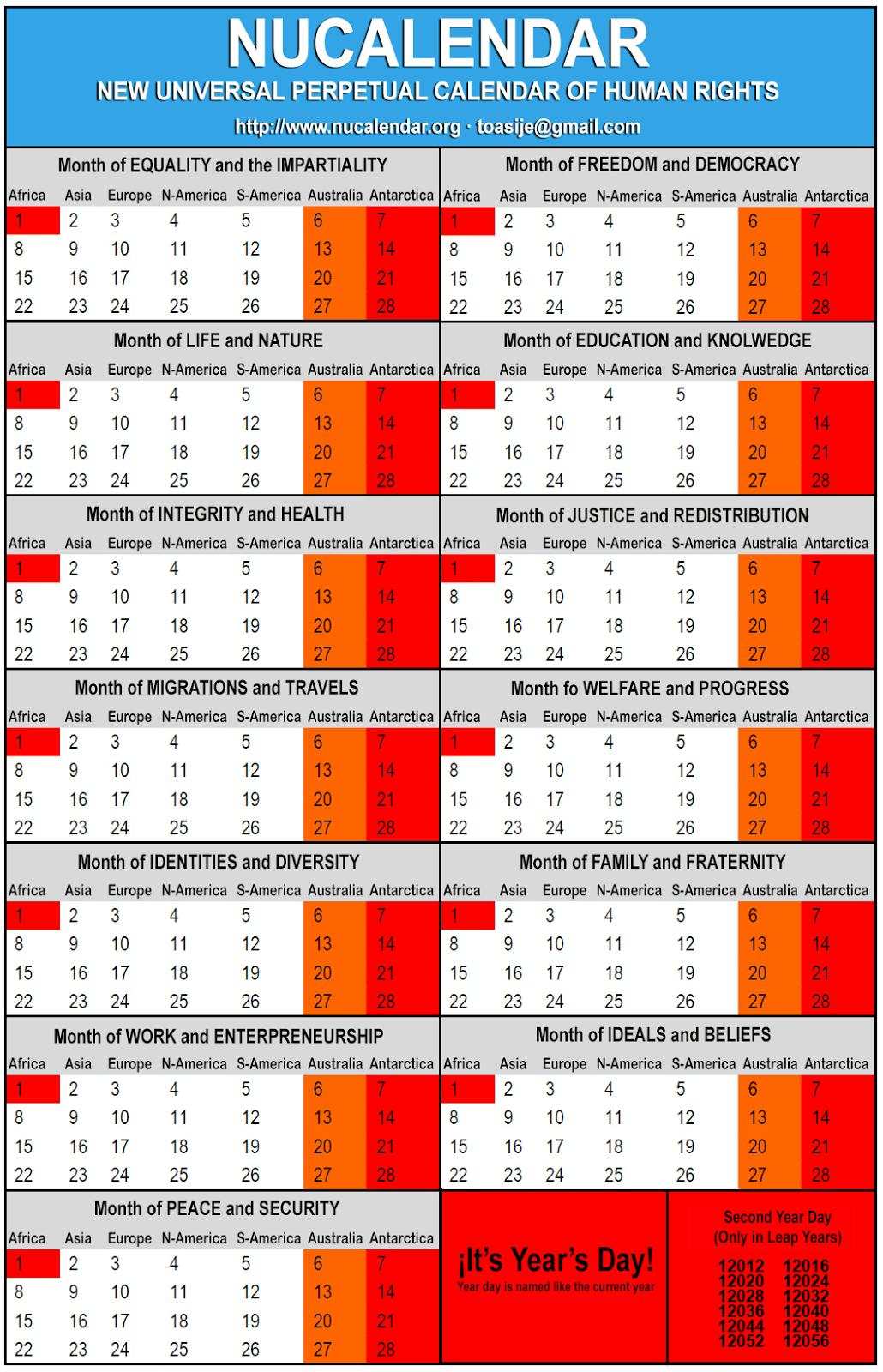
A number of variations of the 28-day, 13-month calendar exist, however they often share the identical basic construction. The yr is prolonged to 364 days, comprising 13 28-day months. An additional day, or generally a "leap day" (or two), is added on the finish of the yr to account for the discrepancy between the photo voltaic yr (roughly 365.25 days) and the 364-day calendar. This further day is commonly handled as a vacation, just like New 12 months’s Day.
Some proposals recommend distributing the additional days all year long, maybe including an additional day on the finish of each quarter. This strategy mitigates the potential disruption of getting a single further day on the finish of the yr. The naming of the months might be tailored to present conventions or completely new names might be adopted. The secret is sustaining the consistency of the four-week month construction.
Challenges and Objections:
Regardless of its inherent benefits, the 28-day, 13-month calendar faces important obstacles to widespread adoption. These embody:
-
Inertia and Custom: The Gregorian calendar is deeply ingrained in our cultural and societal cloth. Altering to a brand new system would require a monumental shift in mindset and infrastructure, involving important prices and potential disruption.
-
Non secular and Cultural Significance: Many spiritual and cultural occasions are tied to particular dates within the Gregorian calendar. Shifting to a brand new calendar would necessitate changes to those occasions, doubtlessly inflicting battle and resistance.
-
Worldwide Coordination: World adoption of a brand new calendar would require worldwide cooperation on a scale hardly ever seen. Reaching a consensus amongst nations with numerous calendars and traditions can be a formidable problem.
-
The Leap Day Downside: Whereas the additional day or days might be accommodated, its placement and remedy stays some extent of rivalry. Whether or not it’s a vacation, a floating day, or built-in into present months requires cautious consideration and will result in additional complexities.
-
Software program and Technological Adaptation: Adapting present software program, databases, and technological techniques to a brand new calendar can be a pricey and time-consuming enterprise. This may influence varied industries, from finance and transportation to healthcare and schooling.
Potential Options and Compromises:
Overcoming the obstacles to adoption requires a phased strategy, doubtlessly involving:
-
Gradual Transition: A gradual transition over a number of years might reduce disruption. This might contain a dual-calendar system for a interval, permitting people and organizations to adapt at their very own tempo.
-
Worldwide Collaboration: Worldwide organizations and our bodies might play a vital position in facilitating the transition, coordinating efforts and addressing issues from totally different nations.
-
Public Schooling and Consciousness: A widespread public schooling marketing campaign can be important to tell people and organizations about the advantages and challenges of the brand new calendar.
-
Addressing Non secular and Cultural Issues: Cautious consideration of non secular and cultural sensitivities is essential. A collaborative strategy involving spiritual leaders and cultural teams might assist mitigate potential conflicts.
Conclusion:
The 28-day, 13-month calendar represents a compelling different to the Gregorian calendar. Its inherent simplicity provides important benefits when it comes to accounting, scheduling, knowledge evaluation, and total productiveness. Nevertheless, the challenges of adoption are appreciable, requiring cautious planning, worldwide collaboration, and a gradual transition to attenuate disruption. Whereas widespread adoption could appear utopian at current, the potential advantages are important sufficient to warrant continued exploration and dialogue. The query is not whether or not a extra environment friendly calendar is fascinating, however slightly how we will overcome the inherent inertia and construct a consensus to embrace a system that higher serves the wants of a globalized and more and more data-driven world. The way forward for timekeeping might properly lie in a extra logical and environment friendly system, and the 28-day, 13-month calendar holds the potential to be that future.






Closure
Thus, we hope this text has supplied worthwhile insights into Rethinking Time: Exploring the 28-Day, 13-Month Calendar. We recognize your consideration to our article. See you in our subsequent article!